Health News Today: Melatonin Long-Term Use Linked to Higher Heart Failure Risk
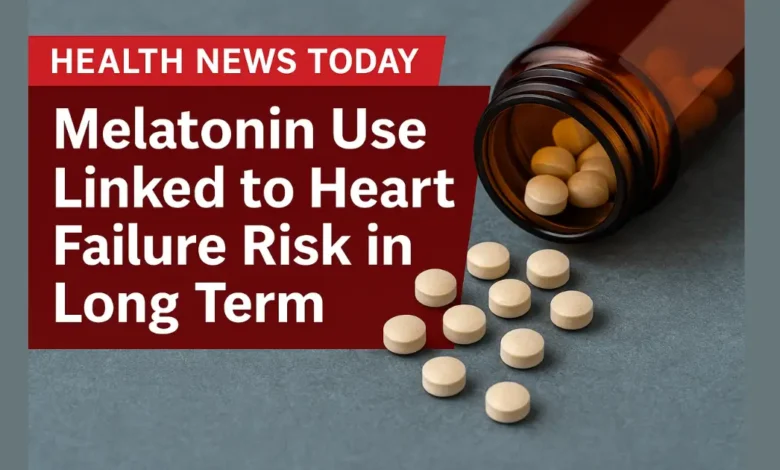
Health news today reports a new study linking long-term melatonin use to increased heart failure risk, raising safety concerns for chronic insomnia patients.
According to several major outlets — including Healthline, Medical News Today, and The Washington Post — researchers have reported a possible link between long-term melatonin use and a significantly higher risk of heart failure. The study’s findings have quickly gone viral across global health news today trends, as experts urge caution over the routine, nightly use of sleep supplements.
Table of Contents
Health News Today: What the Study Revealed
A recent large-scale observational study using the global TriNetX database analyzed over 130,000 adults diagnosed with chronic insomnia. Researchers discovered that individuals taking melatonin for more than one year faced higher rates of heart failure, hospitalization, and even death compared to non-users.
(healthline.com)




Key outcomes over five years included:
- Heart failure risk: 4.6% among long-term users vs 2.7% in non-users — an increase of about 90%.
- Hospitalization rates: 19% vs 6.6%, showing a 3.5× rise.
- Mortality: nearly doubled (7.8% vs 4.3%).
(medicalnewstoday.com)
Lead researcher Ekenedilichukwu Nnadi noted:
“Melatonin supplements may not be as harmless as commonly assumed. If our study is confirmed, this could affect how doctors counsel patients about sleep aids.”
(news-medical.net)
Read Also :
Nvidia AI Dominance Redefines Global Tech Trends in 2025
Why This Health News Today Matters
Melatonin is one of the most widely used over-the-counter sleep aids in the world. For years, it has been marketed as a “natural” and safe option. However, this new health news today story challenges that perception.
According to Science Daily and Pharmacy Times, the supplement’s long-term safety profile remains uncertain, and it may mask underlying conditions such as hypertension, stress, or sleep apnea — all known to increase cardiovascular risk.
Expert Reactions
Sleep and cardiac specialists responded with mixed opinions.
Dr. Muhammad Rishi from the American Academy of Sleep Medicine told The Washington Post:
“These results are provocative and warrant attention. But the study is observational, so we must be cautious before assuming direct causality.”
(washingtonpost.com)
Meanwhile, a report by Hindustan Times highlighted that other factors — including poor sleep, obesity, or existing heart conditions — may explain part of the correlation.
(hindustantimes.com)
What Patients Should Know
Health professionals recommend that people taking melatonin nightly, especially for months or years, discuss it with their doctors. Safer alternatives like Cognitive Behavioral Therapy for Insomnia (CBT-I), sleep hygiene routines, and mindfulness practices can provide long-term results without supplement risks.
Study Limitations
The study has not yet been peer-reviewed and lacks precise dosage data. Researchers also couldn’t confirm how many participants used over-the-counter melatonin, which might affect accuracy.
(ahajournals.org)
This headline-making health news today report doesn’t prove that melatonin causes heart failure, but it raises serious questions about long-term safety. Until more research is available, experts advise moderation, medical supervision, and a focus on holistic sleep management.
FAQs – Health News Today: Melatonin and Heart Health
1. Does melatonin cause heart failure?
No direct proof yet. The study found a statistical link, not a confirmed cause. Further trials are needed to determine if melatonin itself contributes to heart issues.
2. Is short-term melatonin use safe?
Generally yes. Short-term use (a few days or weeks) appears safe for most adults, according to Healthline and Medical News Today.
3. Who should avoid prolonged melatonin use?
People with heart disease, hypertension, diabetes, or chronic insomnia should avoid long-term use without medical advice.
4. Are natural sleep methods better?
Yes. Doctors recommend CBT-I, reducing caffeine, regular bedtime routines, and screen-free evenings as healthier, proven alternatives.
5. Should users stop melatonin immediately?
No. It’s best to consult a doctor before discontinuing. Sudden withdrawal can worsen sleep problems or reveal underlying disorders.
Discover more from feenanoor trend
Subscribe to get the latest posts sent to your email.